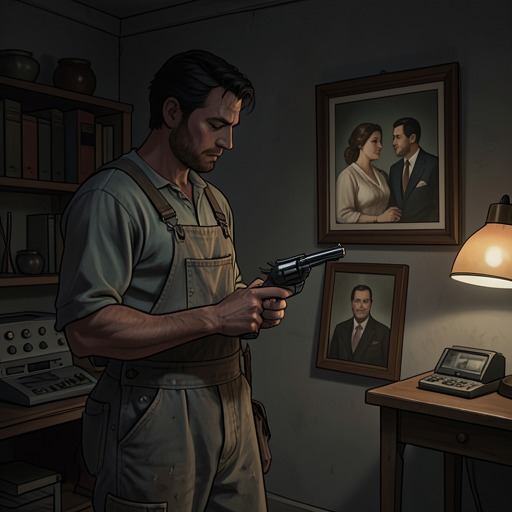
Tater Brown
The Devil All the TimeTater Brown is an offstage figure whose importance in these scenes emerges through the suspicions and private calculations of Lee Bodecker. A deputy raises the possibility that Tater Brown was responsible for Carl and Sandy’s deaths; Bodecker dismisses that theory, but his later thoughts show that Tater Brown remains a criminal problem on his mind. The evidence gives Tater Brown a presence in the story without showing him act directly, leaving his significance to be read through what others fear, assume, and intend to do about him.
Identity and Indirect Introduction
Tater Brown enters the supplied material by name when a deputy asks whether he could have had something to do with the deaths of Carl and Sandy. The question comes during an investigation at the scene, after Lee Bodecker has considered the couple’s bodies and their cash. The deputy’s suggestion that few others nearby would commit such a crime makes Tater Brown a locally plausible suspect in the exchange, but it remains a question rather than an established finding.
Bodecker responds with contempt, calling Tater Brown a slimy criminal and arguing that this killing was too exposed to fit his methods. In Bodecker’s account, Tater Brown would have arranged for the bodies to remain undiscovered for several days rather than let investigators find them so quickly. This distinction reveals how Bodecker assesses the suspect: not by presenting evidence that clears him, but by comparing the circumstances of the deaths with a method Bodecker attributes to him. The confidence of the dismissal belongs to Bodecker; the supplied scene offers no independent confirmation of Tater Brown’s habits or innocence.
A Suspect in the Investigation
The exchange over the bodies places Tater Brown within the lawmen’s immediate field of suspicion. The deputy raises his name as a possible explanation for a violent crime, while Bodecker treats the suggestion as unlikely on practical grounds. Their disagreement is brief, but it sets out two different investigative instincts: the deputy reaches for a known local possibility, and Bodecker judges the crime by the way it was carried out and discovered.
That distinction matters because Bodecker does not say that Tater Brown could not have committed the crime. Instead, he reasons that the open circumstances do not match what he expects from him. The exchange therefore leaves suspicion unresolved rather than furnishing a clue that conclusively identifies or excludes a killer. Tater Brown’s name marks the limits of what the investigators know, while Bodecker’s confident assessment also shows how much of his judgment rests on his personal understanding of local criminal behavior.
Bodecker’s Unfinished Business
Tater Brown remains on Bodecker’s mind beyond the scene of the deaths. After finishing a bottle of whiskey and waking on his office floor the next morning, Bodecker considers suggestions for checking motels and the bus station in connection with the wider problem he is handling. He wants to manage that matter himself, though he recognizes that acting too openly could attract attention. The passage does not identify Tater Brown as the subject of that search, so it does not establish a direct link between him and those proposed checks; it does, however, show Bodecker operating amid several unresolved pressures rather than conducting a straightforward inquiry.
Later, at the abandoned Russell property, Bodecker thinks he will have to do something about Tater Brown and believes it will not be difficult. The thought comes as he considers the property, his political future, and the work before him. He imagines that the Russell boy could be useful to him in another election, while also dreading public exposure of the truth about Sandy and the photographs connected to her. In this sequence, Tater Brown appears as a separate item in Bodecker’s private inventory of problems: someone to deal with, but not the immediate task that has brought him to the property.
Narrative Role and Limits of the Evidence
Tater Brown’s function in these scenes is largely structural. His name widens the apparent field of possible criminal responsibility around Carl and Sandy’s deaths, then connects that local criminal world to Bodecker’s own calculations. The contrast between the deputy’s open suspicion and Bodecker’s dismissive explanation creates a provisional distinction between a crime’s appearance and the methods attributed to a suspected offender. Because neither speaker supplies evidence about Tater Brown’s presence at the scene, the exchange preserves uncertainty instead of resolving the case.
The later references deepen the sense that Bodecker regards Tater Brown as a problem requiring action, but they do not disclose what Tater Brown has done, what Bodecker intends to do, or whether that intention is ever carried out. Nor do these passages show Tater Brown speaking, appearing in person, or explaining himself. His characterization is consequently mediated: a deputy proposes his name, Bodecker disparages and differentiates him, and Bodecker’s later thoughts register him as unfinished business. That narrow, indirect presentation makes Tater Brown consequential to the surrounding criminal and investigative pressures while keeping his own role unresolved.